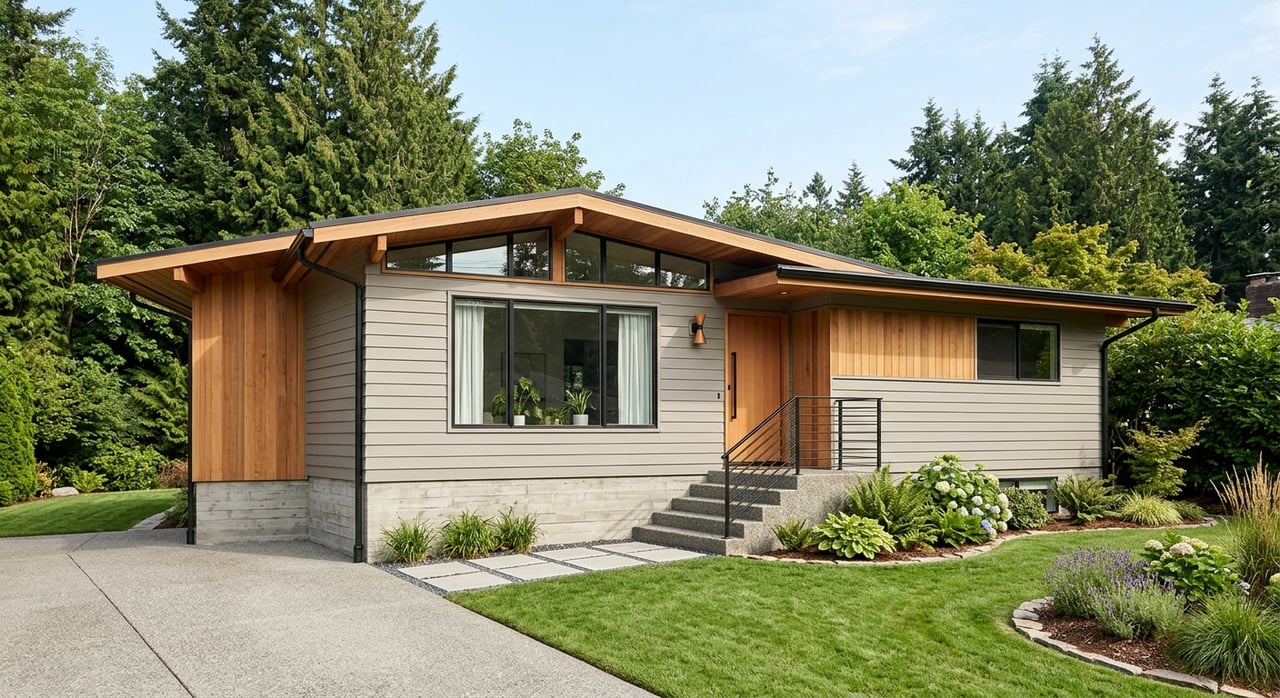
Wondering which home style makes the most sense in Lake Forest Park? You are not alone. In a city known for mature trees, varied topography, and older housing stock, the right fit often comes down to how a home’s layout, lot, and condition match the way you want to live. This guide will help you compare the home styles you are most likely to see, what to watch for on the lot itself, and how to think about updates and resale before you buy. Let’s dive in.
Why home style matters here
Lake Forest Park is not a place where every listing feels interchangeable. The city says about 96% of its land is zoned for single-family residential development, and its housing stock is largely older, with most homes built between 1950 and 1980. Just under one-third of homes were built before 1960, and another 41% were built between 1960 and 1979.
That age profile shapes what you will see in person. Instead of large pockets of newer subdivision homes, you are more likely to find houses with distinct layouts, mature landscaping, and renovation potential. If you care about character, lot setting, and architectural style, Lake Forest Park gives you more to compare than many newer suburbs.
The market context matters too. Census QuickFacts shows an 80.6% owner-occupied rate and a median owner-occupied home value of $953,200 for 2020 through 2024. That means many buyers here are making long-term decisions, so choosing a style that fits both your daily routine and future plans is especially important.
Common home styles in Lake Forest Park
Based on the city’s housing-age profile and preserved older housing stock, the three home styles buyers are most likely to encounter in Lake Forest Park listings are rambler or ranch, split-level, and mid-century modern. Each offers a different living experience, even when square footage is similar.
Rambler or ranch homes
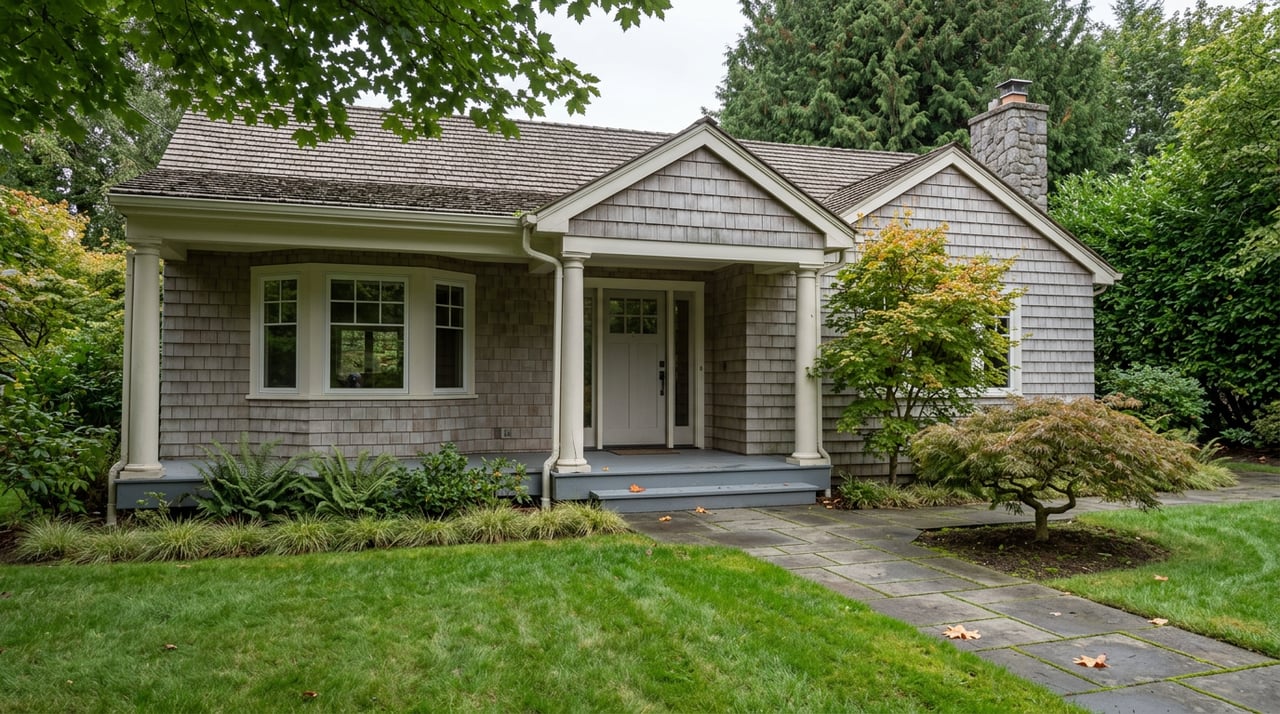
Rambler or ranch homes are typically single-story houses with low-pitched roofs, simple floor plans, and an attached garage or carport. Some also include patios or partially enclosed courtyard areas. In practical terms, this style is often the easiest to connect with one-level living.
In Lake Forest Park, ramblers often sit comfortably on wooded lots because they spread outward instead of stacking living space vertically. That can make the relationship between house and yard feel more natural. If you want easier circulation and fewer stairs in your day-to-day routine, this style may stand out right away.
Why buyers choose ramblers
Many buyers like ramblers because the layout feels straightforward. Rooms are often easier to access, and renovations can be simpler to plan when the house stays mostly on one level. This style can also work well if you are thinking ahead about long-term comfort.
That said, one-level living does not automatically mean every space feels open or updated. Since many of these homes are older, you may want to compare original layouts against remodeled versions. In current listing examples, buyers commonly weigh updated kitchens, newer roofs and windows, upgraded heating and cooling, and improved indoor-outdoor spaces.
Split-level homes
Split-level homes are built around staggered living zones. The front exterior usually shows multiple levels, with the garage and lower level below, main living areas one level up, and bedrooms on another upper level. This layout was designed to separate quieter sleeping areas from busier living spaces.
For some buyers, that separation is a major benefit. You may like having distinct zones for gathering, relaxing, or working from home. A split-level can also make efficient use of the home’s footprint, which can be helpful on lots where grade and site conditions influence design.
Why buyers choose split-levels
If you prefer a little more separation between spaces, a split-level may feel more functional than a rambler. Noise can be more contained, and different areas of the house can serve different purposes. Buyers who like the idea of a lower-level flex space or finished bonus area often find this style appealing.
The tradeoff is the stairs. Daily life in a split-level is more vertical, so it helps to think honestly about how you use your home now and how you want to use it in the future. In remodeled examples, finished lower levels, deck access, and updated systems are often key points of comparison.
Mid-century modern homes
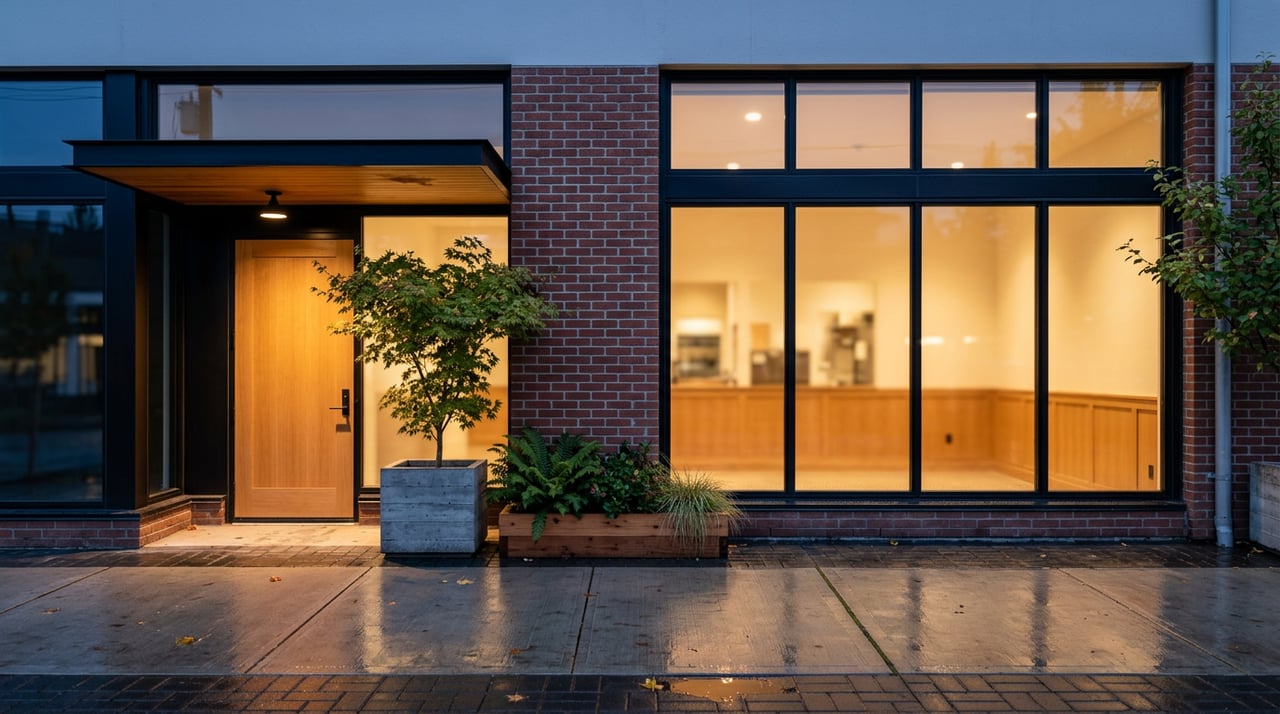
Mid-century modern homes are known for clean lines, minimal ornamentation, flat or irregular rooflines, large plate-glass windows, curtain walls, and accent walls. In Lake Forest Park, this style carries real local meaning. The city’s historic early-home materials and King County’s mid-century context show that the area has a genuine architectural legacy, including homes associated with Seattle builder-architect John Burrows.
That makes a difference when you are shopping. In some markets, “mid-century” can be used loosely in marketing language. In Lake Forest Park, it often reflects a true design tradition tied to the city’s development pattern and wooded setting.
Why buyers choose mid-century modern
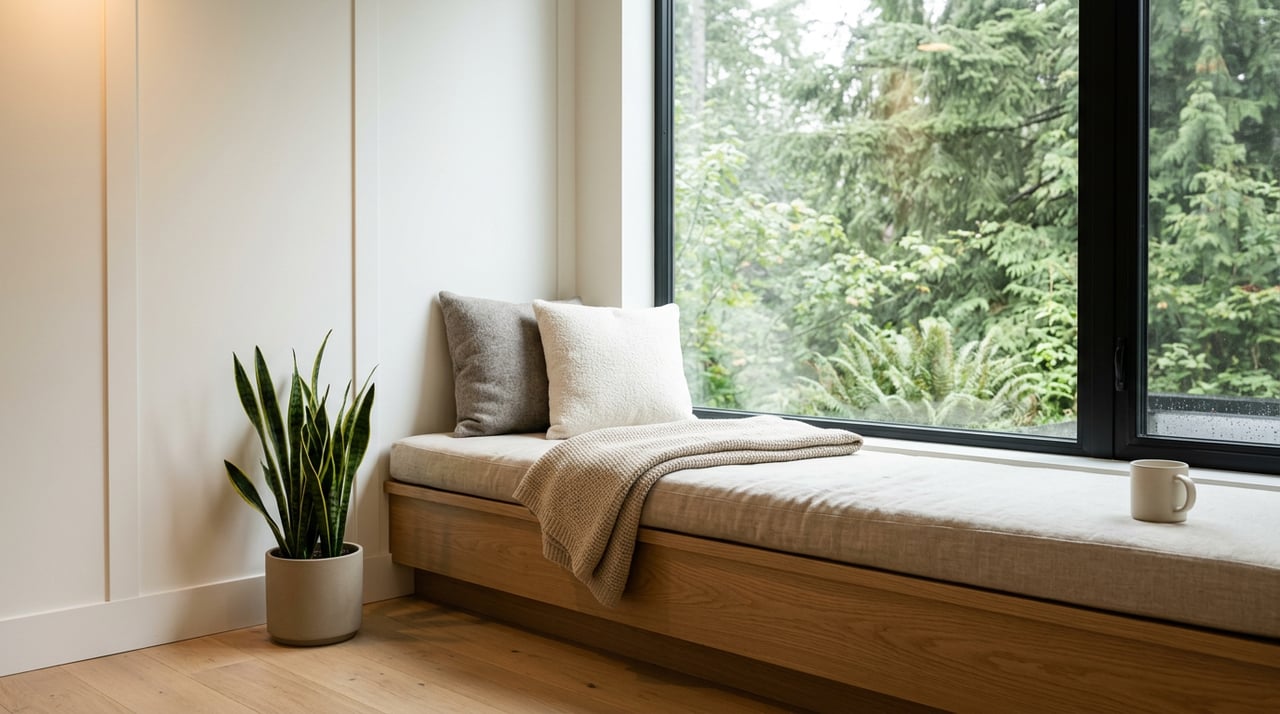
Buyers are often drawn to mid-century modern homes for their natural light, strong indoor-outdoor connection, and architectural character. On a tree-filled lot, expansive windows and simple forms can feel especially striking. If you care about design, this style may offer the most personality of the three.
At the same time, these homes often require a careful balance between preservation and updates. Some current listings pair original features like wood ceilings or beams with modernized interiors. If you are considering this style, it helps to decide which original details matter to you and where you would want more modern function.
How lot shape changes the decision
In Lake Forest Park, choosing a home style is only part of the story. The lot itself can affect how a house lives just as much as the floor plan. Yard space here is shaped by trees, slope, access, and utility placement, not just by raw square footage.
The city’s Community Forest Management Plan notes that the original city area still includes many large lots with mature cedars, hemlocks, Douglas firs, and bigleaf maples. Annexed areas often have smaller lots and less canopy potential. On smaller parcels, usable outdoor space can be reduced by the house footprint, driveways, grading needs, and underground utilities.
That is why a yard that looks generous on paper may feel different in person. A wide rambler on a wooded lot may leave less open lawn than expected. A split-level or mid-century home on a sloped site may offer privacy and views, but less flat outdoor area for everyday use.
Questions to ask about the lot
Before you decide that a home style is the right fit, it helps to look beyond the square footage and ask practical questions:
- How much of the yard is truly usable?
- How do trees affect light, privacy, and maintenance?
- Is the lot sloped, and if so, how does that shape access?
- Where do setbacks, frontage, or lot-size requirements limit future plans?
- Does the outdoor space support the way you actually want to live?
Lake Forest Park provides mapping tools for zoning, short plats, and accessory dwelling units, and the city notes that parcels are evaluated using minimum lot size and street-frontage requirements. For buyers, the takeaway is simple: lot constraints are worth checking early, especially if you are hoping for flexibility down the road.
Think beyond style to condition
Style can draw you in, but condition often decides whether a home feels like a good fit. In a market with older housing stock, two homes with the same style can offer very different levels of move-in readiness. That is why it helps to compare not just architecture, but also upgrades and maintenance history.
In recent Lake Forest Park listing examples, buyers commonly compare features such as remodeled kitchens, newer roofs and windows, upgraded heating and cooling, finished lower levels, decks, and fenced yards. In mid-century homes, buyers may also weigh how well the house preserves original character while still supporting modern living.
A practical approach is to separate your wish list into two categories: features you love and updates you can handle. For example, you may love the one-level ease of a rambler, the zoned layout of a split-level, or the design character of a mid-century home. Then you can measure each option against the work, budget, and timeline you are comfortable taking on.
How to match style to your lifestyle
The best home style is usually the one that supports your routine without asking you to fight the house every day. In Lake Forest Park, these broad patterns can help you narrow the field.
Best fit for one-level living
A rambler or ranch is often the clearest choice if you want one-level living, simpler circulation, and less stair use. It can be a strong option if ease of movement matters to you now or may matter more over time. Buyers also often appreciate the more straightforward renovation path.
Best fit for separated spaces
A split-level tends to work well if you want living areas that feel distinct from one another. That can be helpful if you value quieter bedroom separation or flexible lower-level space. The layout asks you to be comfortable with stairs, but the payoff can be better zoning of daily activity.
Best fit for architecture and light
A mid-century modern home is often the strongest match if you care about design, natural light, and a strong connection to the wooded landscape. This style can feel special in Lake Forest Park because of the city’s real mid-century legacy. It may also ask for more thought around preservation, updates, and long-term maintenance priorities.
Keep resale in mind
Even if you plan to stay for years, it is smart to think about resale while you buy. Lake Forest Park’s housing assessment notes that older inventory can be associated with lower prices in some markets, but that has not been the pattern here. The report says values have remained strong because of the city’s natural setting, proximity to employment centers, construction quality, supply constraints, and school-district reputation.
The same report says sales prices rose from around $400,000 in 2012 to around $1 million by mid-2023. Census QuickFacts places the current median owner-occupied value at $953,200. For you as a buyer, that means style matters, but condition and setting often matter just as much when it is time to sell.
A well-sited rambler, a functional split-level, or a thoughtfully updated mid-century home can each make sense. The real question is how the property balances layout, lot usability, and improvement needs. In Lake Forest Park, those factors often shape long-term value more than the style label alone.
If you want help comparing home styles, lot conditions, and resale considerations in Lake Forest Park, the Christophilis Team offers neighborhood-focused guidance to help you buy with clarity and confidence.
FAQs
What home styles are most common in Lake Forest Park?
- Buyers are most likely to encounter rambler or ranch, split-level, and mid-century modern homes, based on the city’s postwar housing profile and preserved older housing stock.
What makes rambler homes appealing in Lake Forest Park?
- Rambler homes often appeal to buyers who want one-level living, simpler circulation, and a layout that fits well on wooded lots.
What should buyers know about split-level homes in Lake Forest Park?
- Split-level homes usually offer more separation between living areas and bedrooms, but they also require a more stair-oriented daily routine.
Why do mid-century modern homes stand out in Lake Forest Park?
- Mid-century modern homes stand out because the city has a real local architectural legacy, and many of these homes offer strong natural light, clean lines, and a close connection to the landscape.
How does lot shape affect home choice in Lake Forest Park?
- Lot usability can be affected by trees, slopes, driveways, grading, setbacks, and utilities, so a large parcel may not always translate into equally usable outdoor space.
Is older housing stock a downside for resale in Lake Forest Park?
- Not necessarily. The city’s housing assessment says older inventory has not weakened values here in the way it can in some markets, because setting, quality, and supply constraints continue to support pricing.
What updates are buyers commonly comparing in Lake Forest Park homes?
- Buyers often compare remodeled kitchens, newer roofs and windows, upgraded heating and cooling, finished lower levels, decks, fenced yards, and the balance between preserved character and modern improvements.