If you want a home that feels close to nature without giving up everyday convenience, Lake Forest Park deserves a serious look. This small city at the north end of Lake Washington stands out for its wooded setting, established homes, and easy access to trails, parks, and quiet green space. If you are trying to decide whether it fits your lifestyle, this guide will help you understand what living here is really like. Let’s dive in.
Why Lake Forest Park Appeals
Lake Forest Park is a small, low-density city with an estimated population of 13,276 spread across just 3.52 square miles, according to the U.S. Census Bureau. The same source reports an 80.6% owner-occupied housing rate and a median owner-occupied home value of $953,200.
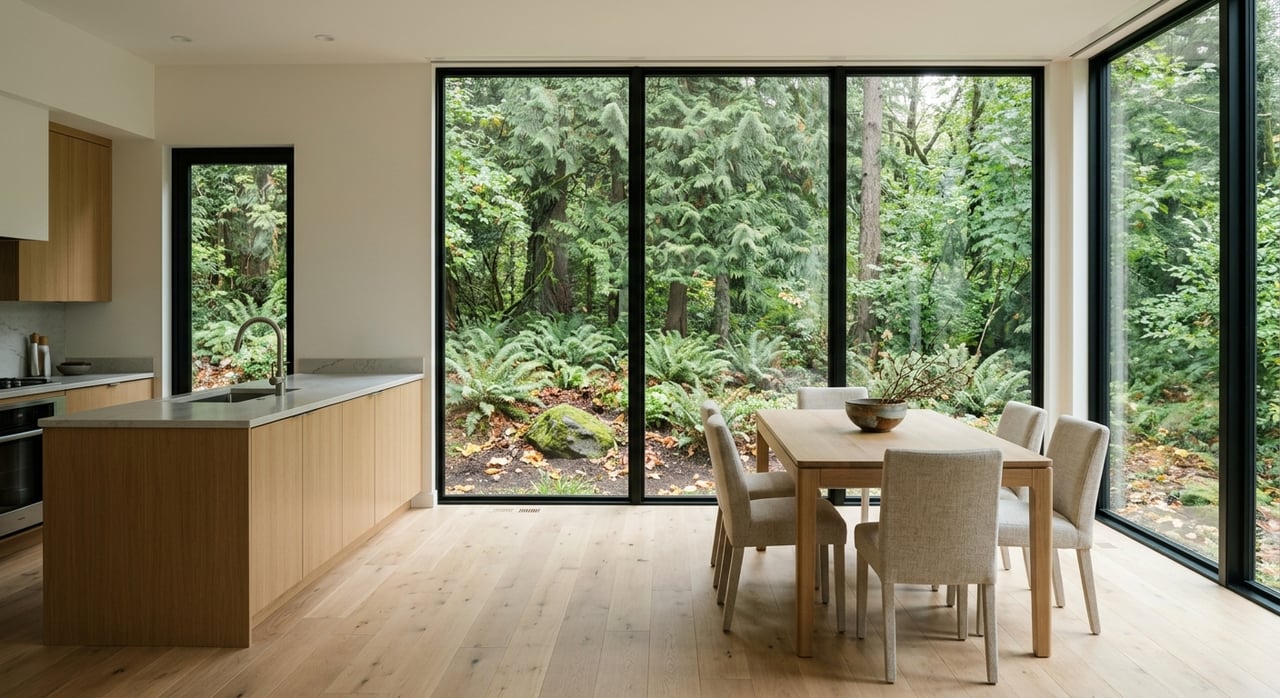
What many buyers notice first, though, is not a statistic. It is the feeling of being surrounded by mature trees and tucked-away homes. That impression is backed up by the city’s 2022-2023 urban forest inventory, which estimated about 290,000 trees and roughly 50% canopy cover across Lake Forest Park, helping explain the city’s distinctly wooded character.
A Wooded Residential Setting
For nature-focused buyers, Lake Forest Park’s biggest draw is often its physical layout. A city-commissioned housing feasibility report says five single-family residential zones account for 96% of parcel acreage in the city.
That same report notes that many homes sit toward the rear of their lots, often with long driveways that make houses less visible from the street. Combined with tree canopy and environmentally sensitive areas that limit some development, the result is a community that often feels quieter and less built-up than nearby urban neighborhoods.
If you are searching for a place where greenery is part of your daily routine, that matters. In Lake Forest Park, the landscape is not just around the neighborhood. It shapes how the neighborhood feels.
Homes With Established Character
Lake Forest Park is not a place where every house fits one mold. The city’s early homes history notes that homebuilding accelerated after 1914, and early showcase homes included Neo-Colonial, Tudor, and Bungalow styles.
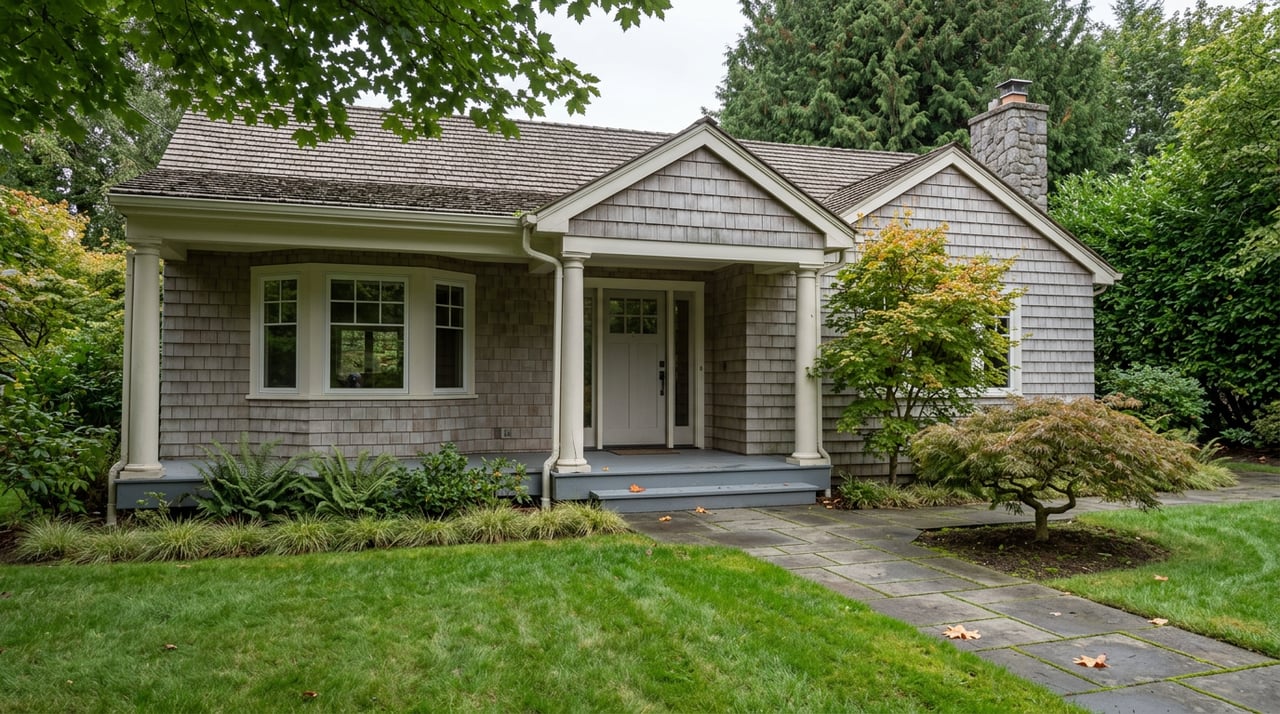
Several of those earlier homes still stand today. For buyers, that means the housing stock includes an established architectural layer rather than reading as a fully postwar suburban environment. You may find a mix of older character homes, later residential construction, and houses shaped by the area’s sloped, wooded lots.
Parks Define Daily Life
Lake Forest Park’s outdoor lifestyle is less about one signature destination and more about having multiple nature spaces woven into everyday life. The city highlights seven parks that support short walks, creekside visits, lake views, and dog-friendly outings.
For buyers who value passive recreation, that park system is a major part of the appeal. Instead of needing a long drive to reach green space, you have local options that support a quick walk, an after-work reset, or a weekend outing close to home.
Grace Cole Nature Park
Grace Cole Nature Park is a 15.2-acre wetland preserve with a boardwalk, observation platform, short walking trail, native plants, birds, amphibians, and the headwaters of Brookside Creek. This is the kind of place that feels peaceful and immersive without requiring a major time commitment.
If you want easy access to a natural setting for short visits, this park is a strong example of what makes Lake Forest Park different. It brings habitat, greenery, and quiet into the middle of daily life.
Horizon View Park
At the city’s highest point, Horizon View Park combines meadows, fields, a wooded path, and a reservoir loop, along with playground and picnic facilities. It offers a different outdoor experience than the city’s creek and wetland spaces.
For households that want both open space and a natural backdrop, this park adds flexibility. You can use it for a quick loop, time outdoors with family, or a more relaxed weekend stop.
Creekside and Forested Parks
Blue Heron Park is a smaller native-planted creekside park with an unpaved loop, salmon viewing, and a pedestrian bridge connecting toward the Town Center area. Pfingst Animal Acres Park includes meadow and shade-tree settings, a salmon-viewing platform, a loop trail, and a demonstration garden.
For a more enclosed forest feel, McKinnon Creek Trail offers a half-mile pedestrian route through a wooded corridor, as described on the city parks page. Together, these spaces reinforce a lifestyle built around accessible, low-key outdoor time rather than destination-style recreation.
What Shoreline Access Really Means
Because Lake Forest Park sits on Lake Washington, some buyers assume broad public waterfront access comes with the package. In reality, the city’s shoreline access is more limited than that first impression might suggest.
The city’s Shoreline Master Program says developed physical public access is currently limited to Lyon Creek Waterfront Preserve, while the Burke-Gilman Trail offers important visual access. The city is also pursuing additional public waterfront access through a future lakefront park project that would connect newly acquired parcels with the preserve.
Lyon Creek Waterfront Preserve
Lyon Creek Waterfront Preserve provides shoreline access, a dock, a boardwalk, and salmon viewing. It is one of the city’s standout outdoor assets, but it is important to view it accurately.
If your dream is a classic public-beach lifestyle with lots of broad lakefront gathering space, Lake Forest Park may feel more limited than other locations. If your goal is to live near shoreline views, natural habitat, and a quieter waterfront experience, it can be a strong fit.
The Burke-Gilman Advantage
The Burke-Gilman Trail is one of the city’s most useful everyday amenities. The city identifies it as the main non-motorized corridor for running, biking, skating, and walking, giving residents a practical and scenic way to move through the area.
For buyers who want to blend exercise, commuting, and recreation, that matters. The trail also helps connect key parts of the city’s outdoor system and adds to the sense that nature in Lake Forest Park is not separate from daily living.
Town Center Adds Convenience
A nature-focused home search usually is not just about trees and trails. You also need a place that works for real life. In Lake Forest Park, much of that day-to-day convenience centers on Town Center at Lake Forest Park.
The city says Town Center is home to Third Place Books, Third Place Commons, and a King County Library branch. It also notes that Third Place Commons hosts almost a thousand public events a year, making the area a practical hub for errands, community activities, and casual local outings.
That mix is part of what makes Lake Forest Park appealing. You can combine a coffee, a library visit, or a community event with time outdoors, often without needing to leave the city.
Outdoor Spaces Near Daily Stops
Some of the city’s green spaces connect naturally with daily routines. Blue Heron Park has a path connection toward the Town Center area, and city planning documents describe Lyon Creek Waterfront Preserve as easy to reach by foot or bicycle from nearby Town Center and the Burke-Gilman Trail.
That is an important quality-of-life detail. In some suburbs, outdoor amenities feel separate from everyday errands. In Lake Forest Park, several of them are easier to work into normal weekly patterns.
Recreation Beyond City Parks
Lake Forest Park’s own park system is relatively small, but residents have access to additional programming through a partnership with Shoreline. The city says residents receive an 8% discount on Shoreline recreation program fees and get an early registration window through this recreation partnership.
For buyers who want both natural surroundings and access to more organized recreation options, that can be a useful bonus. It broadens the city’s amenity base without changing its quieter residential character.
Practical Tradeoffs to Consider
Every neighborhood choice involves tradeoffs, and Lake Forest Park is no different. If you are considering a move here, it helps to weigh the lifestyle benefits alongside the practical realities.
Driving Is Still Important
Lake Forest Park is convenient for regional travel, but it is not a dense transit hub. The city says Bothell Way NE is a major corridor carrying tens of thousands of drivers each week, while the Census Bureau lists a mean commute time of 28.2 minutes.
Sound Transit’s ST3 plan includes an SR 522/NE 145th Bus Rapid Transit line through the city, which adds another transportation option. Still, for many households, driving will remain the main way to get around, with transit serving as a helpful supplement rather than the core lifestyle feature.
Tree Protections Matter
For buyers who love the city’s wooded identity, Lake Forest Park’s tree policies are worth noting. The city’s permit center says major tree removals require an arborist report, and the city maintains a Tree Board that advises the council on tree-related issues.
The 2024 Comprehensive Plan update also identifies preserving tree canopy as a climate priority. In practical terms, that supports the long-term landscape many buyers are coming here to find in the first place.
Who Lake Forest Park Fits Best
Lake Forest Park tends to work well for buyers who want a mature residential community with a strong natural setting and an established housing stock. It can be especially appealing if you value passive recreation, tree cover, creek corridors, and a quieter feel over a more urban, highly built-up environment.
It may be less ideal if your top priority is extensive public waterfront access or a lifestyle centered on dense retail and transit. The city’s appeal is more about living near greenery every day than about offering nonstop activity.
What Buyers Should Focus On
When you tour homes in Lake Forest Park, it helps to look beyond square footage and finishes. Pay close attention to how a home sits on its lot, how much privacy the landscaping creates, and how close you are to the parks, trails, and daily conveniences you expect to use most.
You should also think about your real routine. If a wooded setting, local walks, and a small-town feel near Seattle sound like the right match, Lake Forest Park can offer a distinctive lifestyle that is hard to duplicate nearby.
If you are considering a move to Lake Forest Park, working with a team that understands neighborhood fit can make your search more focused and less stressful. The Christophilis Team offers buyer and seller representation with local insight, high-touch guidance, and practical support to help you evaluate whether this nature-forward community aligns with your goals.
FAQs
What is Lake Forest Park like for nature-focused homebuyers?
- Lake Forest Park offers a heavily wooded setting, about 50% tree canopy cover, multiple parks and trails, and a low-density residential feel that appeals to buyers who want daily access to greenery.
Does Lake Forest Park have public access to Lake Washington?
- Yes, but public physical shoreline access is limited today, with Lyon Creek Waterfront Preserve serving as the city’s main developed public waterfront access point.
Are there many parks in Lake Forest Park, WA?
- Yes, the city has seven parks, including Grace Cole Nature Park, Horizon View Park, Blue Heron Park, Pfingst Animal Acres Park, and Lyon Creek Waterfront Preserve.
Is Lake Forest Park more about trails or waterfront living?
- For most buyers, the lifestyle is more about trails, tree cover, creek corridors, and neighborhood green space than broad public waterfront living.
What is the housing character in Lake Forest Park?
- Lake Forest Park has an established housing stock with a mix of home styles, and many houses sit back from the street on wooded lots with a more private feel.
Is Lake Forest Park convenient for commuting?
- It can be convenient for regional travel, but most households will still rely mainly on driving, with transit options playing a secondary role.