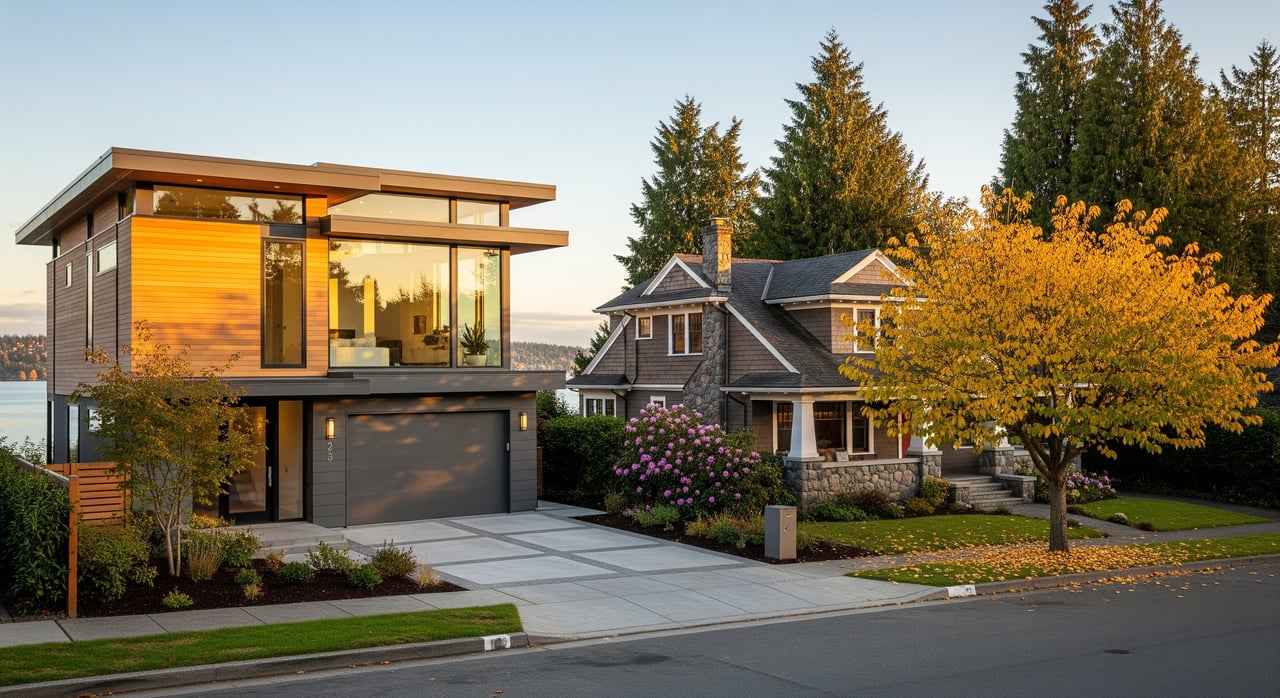
Should you go for the sparkle of a brand-new build or the charm and value of a resale home in Kirkland? It is a big decision, and both paths can work well depending on your budget, timing, and lifestyle. In this guide, you will learn how new construction and resale homes compare on cost, maintenance, timeline, warranties, financing, and neighborhood fit across Kirkland. Let’s dive in.
Quick Kirkland snapshot
Kirkland sits on the Eastside with commute access to Bellevue and Seattle via I-405 and SR-520. You will find a mix of infill single-family homes, townhomes, and multifamily projects in hubs like Totem Lake and portions of downtown. Established neighborhoods such as Juanita, Finn Hill, North Rose Hill, and Moss Bay often see tear-downs replaced with modern two-story builds alongside classic homes.
Market stats can shift quickly. Before you make a move, review current pricing, inventory, and days on market using local MLS data and recent neighborhood sales. The City of Kirkland’s planning and permit resources can also help you understand nearby projects and development trends.
New construction: pros and trade-offs
New homes in Kirkland typically carry a price premium per square foot. In exchange, you get modern layouts, current energy codes, and lower near-term maintenance because systems, roof, and appliances are new. Many new builds also include limited workmanship and manufacturer warranties; coverage length and scope vary by builder, so read the documents closely.
If you buy early in the build cycle, you may choose finishes or plan options. Custom or semi-custom builds can deliver a tailored result but often require a longer timeline. Even with new construction, schedule independent inspections at key stages, such as pre-drywall and final walkthrough. Builders sometimes offer incentives like mortgage rate buydowns, closing-cost credits, or upgrade packages depending on inventory and the market.
New developments often have homeowners associations with CC&Rs, rules, and monthly dues. Review these documents and the budget for reserves so you understand ongoing costs and restrictions.
Resale homes: pros and trade-offs
Resale homes can offer a lower entry price or a better price per square foot, especially if you plan to update finishes over time. You can often move in quickly because escrow timelines are shorter than a build cycle. Many resale properties also come with larger lots or mature landscaping that new infill homes may not match.
The trade-off is maintenance. Older systems, roofs, or drainage may need attention. Washington practice includes seller disclosure forms that help guide your inspection plan, but you should still order a thorough inspection and add specialty checks as needed, such as a sewer scope or roof evaluation. In some market cycles, sellers are more flexible on price or repairs, which can help offset upgrade costs.
Cost comparison in Kirkland
- Purchase price: New builds usually cost more per square foot due to modern design, energy-efficient components, and warranties. Resale homes can be more affordable up front, especially if they need updates.
- Soft and closing costs: New construction may include builder fees or HOA startup fees. Resale transactions carry standard closing costs, and you might negotiate credits after inspection. Incentives vary with the market.
- Operating costs: New homes often provide better insulation, windows, and high-efficiency mechanicals, which can lower utility bills and reduce near-term maintenance. Resales may require repairs or system upgrades sooner.
- Property taxes: King County assesses property taxes. A new home’s assessed value typically updates upon completion, which can change your annual tax bill. Check current assessments and levy rates before you buy.
Financing and appraisal tips
Completed spec or inventory homes are usually financed with a conventional mortgage, similar to resale purchases. If you are building from the ground up, you may need construction-to-permanent financing with staged draws. Work with a lender experienced in construction timelines and documentation.
Appraisals for new homes rely on comparable recent sales of nearby new or newer builds. In low-inventory pockets, comparable data can be limited, which may affect your loan approval or required down payment. Give your lender and appraiser a complete package of plans, features, and upgrades.
Neighborhood insights
Kirkland’s value is tied to location, schools, parks, and access to transit and jobs. Most of the city is served by the Lake Washington School District, and school assignments differ by address. Proximity to I-405, SR-520, major bus routes, and shopping areas like Totem Lake and downtown can influence both daily convenience and long-term demand.
Totem Lake and urban convenience
You will see active redevelopment, mixed-use buildings, and newer townhomes near shopping and services. New construction here often trades lot size for modern layouts and walkable access. Transit and freeway connectivity are key draws for commuters.
North Rose Hill, Finn Hill, and Juanita
Expect steady infill, with older homes replaced by modern two-story builds. Many streets retain a leafy, residential feel, and some lots have slopes or environmental features that add permitting steps. If you value a newer single-family home close to the Eastside core, these areas are worth a look.
Moss Bay and Central Kirkland
Close to the waterfront and downtown amenities, this area has selective infill alongside established homes. Small-lot new builds appear where feasible, and competition for well-located properties can be strong. Buyers often balance location benefits with lot size and parking needs.
Energy codes, systems, and ADUs
Washington’s building and energy codes continue to emphasize efficiency and electrification. Many new builds feature heat pumps, enhanced insulation, efficient windows, and EV-ready wiring, which can lower operating costs over time. If you are considering an Accessory Dwelling Unit, review current city rules on size, permits, and utility capacity, since ADU options can vary by lot and zoning.
Due diligence checklists
If you are buying new construction
- Verify builder credentials, references, completed projects, and warranty administration.
- Review the contract for deposits, changes, completion standards, and warranty terms.
- Schedule independent inspections at major milestones, not only the municipal inspections.
- Confirm your financing path and timing, including any builder-required lender steps.
- Review HOA CC&Rs, dues, and reserves early, plus any design restrictions.
- Ask for expected utility use, equipment specs, and EV or solar readiness.
If you are buying a resale home
- Book a general inspection and add specialty checks as needed, such as a sewer scope, roof, pest, or foundation evaluation.
- Read seller disclosures carefully and verify that prior renovations were permitted.
- Study recent neighborhood sales to understand value and negotiation room.
- Price out near-term repairs or updates so you know your true all-in cost.
If you are deciding to build or sell
- Compare a land-plus-build pro forma versus today’s list-and-sell price for the existing home.
- Factor in carrying costs, taxes, and the timeline for permits and construction.
- Evaluate buyer demand by price band in your target neighborhood to guide timing and strategy.
How to choose what fits you
- Choose new construction if you want lower immediate maintenance, current energy features, and the chance to personalize finishes. Be ready for a longer timeline if you buy pre-completion.
- Choose resale if you want a faster move-in, a larger lot, or a wider range of locations and price points. Budget for upgrades and plan your projects.
- If commute and daily convenience matter most, focus on areas with strong access to I-405, SR-520, and major bus routes. If future flexibility matters, explore ADU potential, HOA rules, and local permitting requirements.
Next steps
Every move has trade-offs, and the right answer depends on your timeline, budget, and neighborhood goals. If you want a calm, clear plan tailored to Kirkland’s market, we are here to help you compare options, negotiate with confidence, and move forward smoothly. Connect with the Christophilis Team to start a free, no-pressure consultation.
FAQs
What makes new construction more expensive in Kirkland?
- New builds often cost more per square foot because they include modern layouts, current energy codes, newer systems, and limited warranties, which lower near-term maintenance.
Should I get a home inspection on a new build in Kirkland?
- Yes. Schedule independent inspections at key milestones, such as pre-drywall and final walkthrough, to catch defects or incomplete items before closing.
How long does building a home in Kirkland take?
- Timelines vary. A completed spec home may be ready in weeks or months, while a ground-up or semi-custom build can take several months to over a year depending on permits and site conditions.
Do new homes appreciate faster than resale in Kirkland?
- Appreciation depends more on location, amenities, schools, and market cycles than on whether a home is new or resale.
Are there extra fees or taxes on new homes in Kirkland?
- During construction, projects may incur impact and connection fees. After completion, King County updates assessed value, which can change your annual property tax bill.
Can I add an ADU to a Kirkland home?
- Many single-family zones allow ADUs under state and local rules. Check current city standards for size, permits, and utility capacity before planning an ADU.