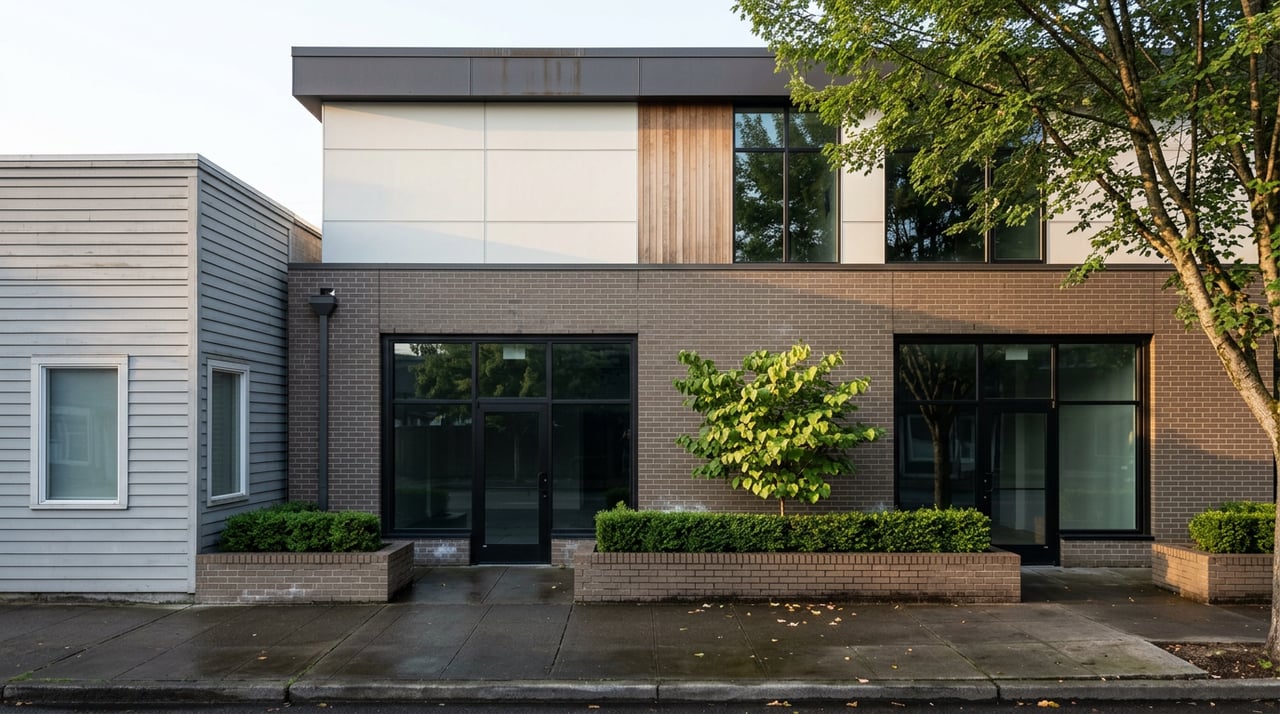
In January 2026, a landscaping crew showed up at the Town Center in Lake Forest Park with orders to clear brush along Lyon's Creek, the stream that runs behind Starbucks and Chase Bank. Within days, the city had posted a stop-work order at the site. According to the local outlet LFP Town Crier, the crew had been hired by the shopping center's new owner, Elmsford, New York-based DLC Management Corp, and the brush they cleared sat inside a protected riparian buffer that the Lake Forest Park Stewardship Foundation had spent years defending for salmon habitat.
It reads like a small story about a landscaping mistake. It is actually a preview of the one variable that explains why Lake Forest Park homes carry a real, durable premium over Shoreline and Kenmore, two cities that sit right next door and look similar on a map.
The parcel that carries the weight
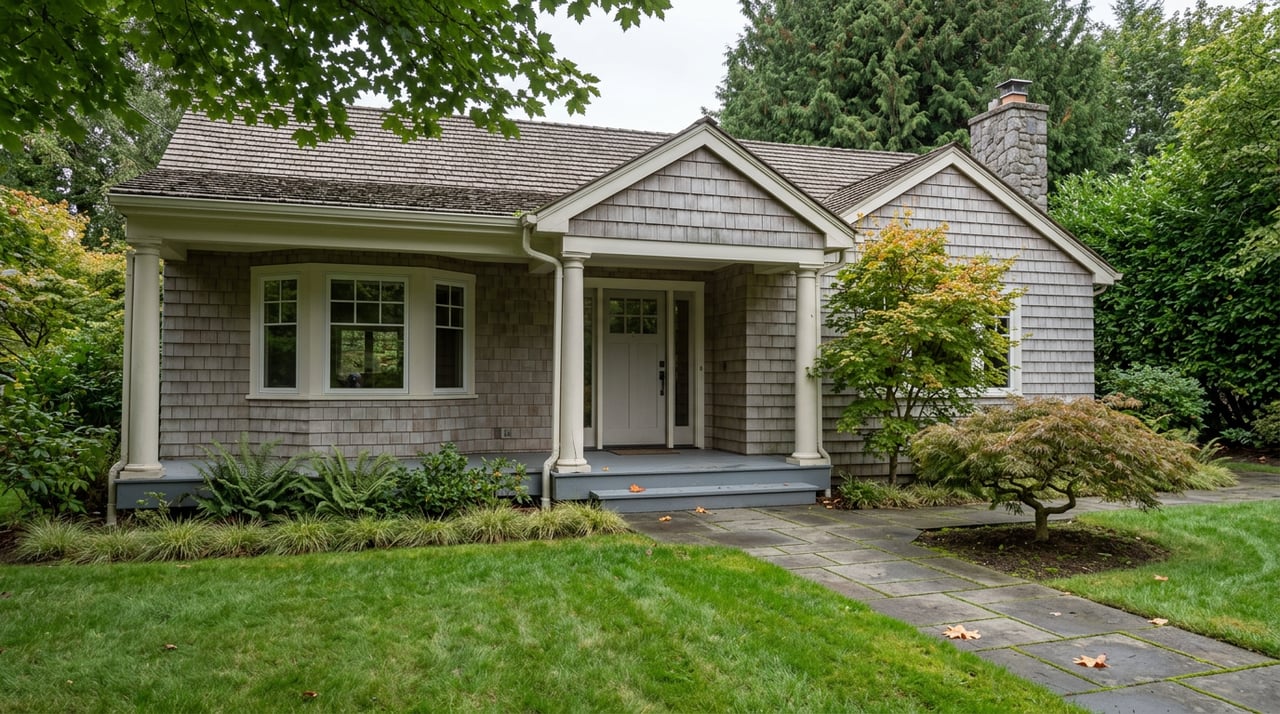
Lake Forest Park has almost no commercial land. The Town Center at 17171 Bothell Way NE, anchored by Safeway, Third Place Books, Ross, Ace Hardware, and Planet Fitness, is close to the only significant commercial and retail footprint inside city limits. Everything else, block after block, is zoned for single-family homes.
That matters for a buyer comparing median prices on a portal for one reason: a city with almost no commercial tax base has almost no commercial land to redevelop, which means almost no supply-side pressure that could ever soften home values the way new retail or mixed-use construction might elsewhere. When something happens at that one parcel, whether it's a new owner, a stalled lease, or a stop-work order over a creek buffer, it isn't background noise. It's the whole commercial story of the city playing out in one place at one time.
A city built to stay one thing
This isn't a recent zoning preference. It's the reason the city exists. According to Lake Forest Park's own 2025-2026 biennial budget message, the area was founded as a planned residential community in the early 1900s, and single-family development continued for decades before residents incorporated it as a city in 1961. By most local accounts, incorporation followed a specific fight: a proposal for a large shopping center near the Bothell Way and Ballinger Way intersection that residents believed would change the semi-rural character they'd moved there for. Incorporating gave the community its own zoning authority, and that authority has been used, consistently, to keep the city residential.
You can see the outcome in the current zoning map. The City of Lake Forest Park's municipal code lists its established zones as:
- R-20, R-15, R-10, R-9.6, R-7.2 (single-family residential, at varying densities)
- RM-3600, RM-2400, RM-1800, RM-900 (multi-family residential)
- BN, CC, TC (neighborhood business, community commercial, and town center)
- SG-LDR, SG-T, SG-C (Sheridan/shoreline-related designations)
Three commercial designations against eleven residential ones, in a city of roughly three and a half square miles. That ratio is the mechanism. It didn't happen by accident and it isn't likely to reverse.
What that pattern costs, and to whom
A city with almost no commercial tax base pays for police, parks, and public works largely through residential property taxes. That doesn't mean Lake Forest Park's tax rate is unusually high. Effective property tax rates across Lake Forest Park, Shoreline, and Kenmore land in a similar band, generally under one percent of assessed value, which is typical for north King County. The rate isn't the story.
The dollar amount is. Because home values in Lake Forest Park run higher, the same rate produces a bigger bill. County-level tax data compiled in 2026 puts the average Lake Forest Park property tax bill noticeably above the King County average, not because the city taxes more aggressively, but because there's more home value to tax and fewer commercial parcels to share the load. If you're comparing total housing cost, not just the sale price, that gap is worth running the numbers on before you assume Shoreline or Kenmore is the cheaper option once taxes are in the picture too.
The three cities, side by side
Pull closed-sale data from 2026 and the spread between these three cities looks less like a smooth gradient and more like two stable numbers and one that swings wildly.
| City | Recent median sale price | Time window |
|---|---|---|
| Lake Forest Park | $1,042,500 | April 2026 |
| Shoreline | $799,900 | May 2026 |
| Kenmore | $850,000 in March, $1,288,000 by midsummer | March to July 2026 |
Shoreline moves in a narrow band. Lake Forest Park runs consistently above it. Kenmore does neither. It swung by more than 50 percent in the space of a few months, and that swing is itself informative.
Why Kenmore's median won't hold still
Kenmore mixes condos and townhomes near its town center with larger single-family homes along Lake Washington, including some near the Lake Forest Park boundary. When a month's closings lean toward the condo side, the median drops. When a handful of lakefront estates close in the same window, the median jumps by hundreds of thousands of dollars. That's not a market correcting itself. It's a median doing what medians do when the underlying housing stock isn't uniform.
Lake Forest Park doesn't have that volatility because it doesn't have that mix. It's single-family homes, on similar-sized wooded lots, in a city that has spent more than sixty years making sure that stays true. If you're using a median price to judge whether a city is "worth it," Lake Forest Park's number is telling you something closer to a stable trend line. Kenmore's is telling you which type of home happened to sell last month.
The new owner, and what nobody's promised yet
The Town Center itself changed hands in October 2025. San Francisco-based Merlone Geier Partners, which had owned the property for years and been part of the public conversation around a city-led Town Center Vision process dating back to 2018, sold it as part of a ten-property, $625 million West Coast portfolio deal to DLC Management Corp and DRA Advisors, according to Commercial Observer's coverage of the transaction. DLC's own leasing materials describe Lake Forest Park as sitting in the top tier of Washington's wealthier communities, which tells you how the new owner is pitching the site to future tenants.
What DLC hasn't shown yet is that it understands the ground rules here. The Lyon's Creek incident in January was a first, visible test of that, and the city answered immediately with a stop-work order. The Lake Forest Park Stewardship Foundation exists specifically to protect local wetlands and creek habitat for salmon, and it was an alert resident connected to that group who flagged the brush clearing before the city stepped in. Any future redevelopment conversation at the Town Center, including anything tied to Sound Transit's long-discussed bus rapid transit hub on the site, will run through that same set of local protections.
What this means if you're cross-shopping
If you're comparing Lake Forest Park to Shoreline or Kenmore on price alone, you're comparing the wrong thing. The premium isn't a lake-access surcharge that could erode if a few more waterfront listings hit the market. It's the price of buying into a city that made a structural choice in 1961 and has never really revisited it. That choice caps commercial supply, keeps the housing stock uniform, and pushes more of the tax burden onto homeowners in raw dollars even when the rate looks ordinary.
The open question isn't whether Lake Forest Park will get cheaper. It's what happens to the one parcel that carries the city's commercial weight, and whether a New York ownership group used to bigger, denser West Coast retail assets adapts to a city that has spent six decades saying no to exactly that kind of change.
A few questions worth asking before you compare
Does the price gap between Lake Forest Park and Shoreline show up the same way in every price bracket? Not necessarily. The comparisons above use city-wide medians, which blend starter homes with larger lots near the water. A local agent pulling comps for a specific home type will give you a tighter read than a citywide median ever can.
Could Town Center redevelopment eventually add commercial tax capacity and ease the pressure on residential tax bills? It's possible, but nothing has been approved. The current owner is still working through basic site management, and any larger redevelopment would go through the city's planning process, public comment, and likely years of review before it changed the tax picture.
Is Kenmore actually more affordable than Lake Forest Park, or does it just look that way some months? It depends entirely on which homes sold that month. A buyer focused on a specific price range and home type should compare against recent closings of that same type, not the citywide median in either city.
If you're weighing Lake Forest Park against Shoreline or Kenmore and want comps that reflect your actual price range and home type rather than a citywide average, the Christophilis Team knows this stretch of north King County closely. Schedule a free consultation to discuss your neighborhood goals and we'll walk through what your budget actually buys in each city, not just what the median suggests.