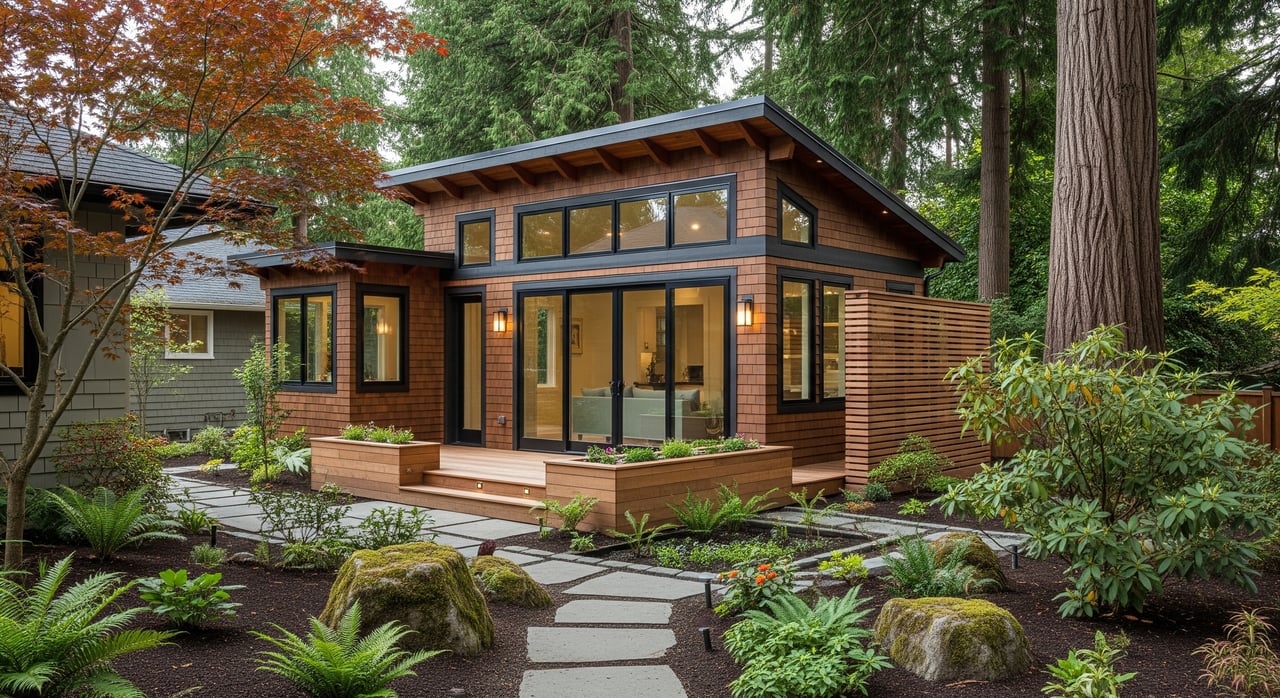
Thinking about adding a second home on your Lake Forest Park lot to create rental income, support multigenerational living, or boost resale value? You are not alone. Many North King County owners are weighing an ADU versus a DADU and want a clear plan that fits local rules, budget, and site realities. In this guide, you will learn the differences, what the City of Lake Forest Park and King County may require, cost and financing basics, and a practical step-by-step checklist to get started with confidence. Let’s dive in.
ADU vs DADU: What they mean
An accessory dwelling unit, or ADU, is a secondary home on the same lot as your primary house. It can be attached to your home as an addition or created inside your existing footprint by converting space like a basement, attic, or garage. Some places also recognize a junior ADU, which is a smaller interior unit with more limited kitchen facilities depending on local code.
A DADU is a detached accessory dwelling unit. You might hear it called a backyard cottage, carriage house, or granny flat. It is a standalone structure with its own kitchen, bathroom, and sleeping area.
Quick side-by-side benefits
- ADU (attached or interior conversion)
- Often the lowest cost path since you reuse structure and utilities.
- Usually faster to permit and build than a new standalone building.
- Minimal impact on yard space and landscaping.
- DADU (detached)
- Greater privacy and autonomy for both households.
- More design freedom for layout, windows, and orientation.
- Typically stronger rental appeal due to separation from the main house.
What to verify in Lake Forest Park
Washington State supports ADUs, and many King County cities have adopted ADU-friendly rules. The details that affect your project are set locally. Always confirm current standards with the City of Lake Forest Park and, where relevant, King County.
Zoning and lot eligibility
Start by learning your zoning and whether ADUs and DADUs are allowed on your lot. Confirm any minimum lot sizes, overlay zones, or lot-line rules that could affect a detached unit.
Size limits
Ask the city about maximum floor area for attached and detached units. Some places set different caps for interior conversions, attached ADUs, detached ADUs, and junior ADUs. Also confirm any percentage-of-primary-dwelling or lot-area limits.
Height, setbacks, and coverage
Review required front, side, and rear setbacks for a detached unit and compare them to your lot dimensions. Check height limits, roof features, and any special rules for porches or lofts. Verify maximum lot coverage and impervious surface rules that could be affected by a new driveway or patio.
Parking requirements
Many Washington cities have reduced or eliminated on-site parking mandates for ADUs under certain conditions, but local rules vary. Ask whether Lake Forest Park requires an additional parking space for your specific site and unit type.
Utilities, sewer, and septic
Clarify whether separate water, sewer, and electric meters are allowed or required. Request information on connection fees and service upgrades. If your home uses a septic system, contact King County Public Health to evaluate capacity and any upgrade requirements triggered by a second dwelling.
Owner-occupancy and rental rules
Some cities require an owner to live in either the main home or the ADU. Others have removed that requirement. Confirm Lake Forest Park’s current policy. If you are considering short-term rental, ask about any licensing and local limits for ADUs.
Permitting and inspections
Ask the city about the permit pathway for your project type. You may need building, mechanical, plumbing, and electrical permits, plus site plan review. Request a checklist of required drawings and learn the typical inspection sequence.
Environmental and tree protections
Lake Forest Park properties often include mature trees and sensitive areas. Check whether your lot has regulated trees, steep slopes, wetlands, or buffers that affect placement, foundations, or stormwater management.
Impact fees, connections, and fire code
Confirm any development impact fees, utility connection charges, and potential fire-safety requirements such as unit separation, fire-rated construction, or sprinklers depending on proximity to other structures.
Site and design choices in our area
Lake Forest Park lots can vary widely. Some are wooded or sloped, which affects cost, drainage, and placement. A quick feasibility review will help you narrow options before you invest in design.
Site feasibility checklist
- Lot lines, buildable area, easements, and existing utilities above and below ground.
- Topography, stormwater direction, and any drainage improvements that may be needed.
- Septic system location and capacity if not connected to sewer.
- Tree protections and any critical-area buffers.
- Driveway access, turning radius, and emergency access.
- Neighborhood character and design considerations that may apply.
Design tradeoffs to consider
- Interior conversion ADU
- Typically the lowest cost. Fastest route if the layout works.
- Watch for ceiling height, egress, natural light, and sound separation.
- Attached ADU
- Moderate cost with easier utility tie-ins and shared walls.
- May require foundation work and smart transitions to the main house.
- DADU
- Highest cost due to new foundation, full envelope, and site work.
- Maximum privacy and layout control, plus flexible orientation for light and yard space.
Timeline snapshot
- Feasibility and site survey: about 2 to 6 weeks.
- Design and permit application: about 4 to 12 or more weeks depending on complexity.
- Permit review and corrections: about 2 to 12 or more weeks depending on city workload.
- Construction: a few months for small conversions and 4 to 9 or more months for a DADU.
Actual timelines vary. Ask the City of Lake Forest Park about current permitting turnaround.
Cost, financing, and taxes
Exact costs depend on scope, site conditions, and finish level. In general, interior conversions are the most economical, attached ADUs fall in the middle, and DADUs are typically the highest cost per square foot.
What drives total cost
- Size and complexity of the unit’s layout and structure.
- Foundations, grading, and any retaining or drainage work.
- Utility connections and potential service upgrades.
- Septic evaluation and upgrades if applicable.
- Design, engineering, permit, and impact or connection fees.
- Interior finishes, appliances, and code-required features like egress.
Common financing paths
- Cash or savings if the project is modest or phased.
- Home equity line of credit or second mortgage.
- Construction or construction-to-permanent loan for ground-up DADUs.
- Renovation loan products such as FHA 203(k) or Fannie Mae HomeStyle, subject to lender and project type.
- Portfolio or private lenders that specialize in ADU financing.
- Occasional incentives or fee reductions offered by local agencies or utilities. Verify current programs.
Taxes, insurance, and value
Rental income is taxable, so track costs that could be deductible and consult a tax professional. Adding an ADU is considered an improvement and may change your assessed value. Contact the King County Assessor to learn how improvements are valued and whether any phasing applies. Update your homeowners insurance and consider landlord or extra liability coverage if you plan to rent.
Renting your ADU or DADU
If you want long-term rental income, confirm local rental registration and landlord-tenant rules. If you want short-term rental flexibility, verify Lake Forest Park’s short-term rental rules and any required business or STR licensing. Make sure the unit meets habitability and safety standards, including independent egress and compliant sleeping areas.
Owner checklist to get started
Use this checklist to prepare for a pre-application chat with the city or a design professional.
- Current property survey with lot lines, existing structures, and any easements.
- Site photos and rough measurements of yard areas, utilities, and tree locations.
- Zoning designation, parcel data, and whether you are on sewer or septic.
- Notes on any HOA or private covenants that regulate outbuildings.
- Your budget range and your main use case: family, long-term rental, or short-term rental.
Step-by-step process
- Do a preliminary feasibility review with the city or a planner.
- Order a site survey and verify utility locations and capacity.
- Work with a designer on a concept plan and site layout.
- Prepare a complete permit set including structural, energy, and MEP drawings.
- Submit permits and respond to review comments.
- Build according to approved plans and pass inspections.
- Obtain final occupancy or sign-off and begin your planned use.
ADU or DADU: How to choose
If your top priority is cost and speed, an interior conversion or attached ADU may be the best fit. If privacy, rental performance, and layout control matter most, a DADU often wins. Lake Forest Park lots with mature trees or slopes can favor an attached or interior solution when setbacks and coverage are tight, while larger, flatter lots may easily support a detached cottage.
Think about your long-term goals. A well-designed ADU or DADU can support aging in place, help family live nearby, or create steady rental income. Plan early, verify local rules, and build a budget with soft costs and contingencies included.
Ready to plan your ADU or DADU?
Choosing the right path starts with a clear look at your lot, budget, and goals. If you want local guidance on feasibility, rental strategy, and resale impact in Lake Forest Park, the neighborhood-focused experts at the Christophilis Team are here to help you map the best route. Schedule a free consultation to discuss your neighborhood goals.
FAQs
What is the difference between an ADU and a DADU in Lake Forest Park?
- An ADU is attached to or inside the main house, while a DADU is a separate, standalone structure on the same lot with its own kitchen, bath, and sleeping area.
Do I need on-site parking for an ADU or DADU in Lake Forest Park?
- Parking rules vary by jurisdiction and context, so confirm with the City of Lake Forest Park whether on-site parking is required for your project.
Can I use my ADU for short-term rentals in Lake Forest Park?
- Check the city’s short-term rental rules and any licensing requirements to see whether ADUs are eligible for short stays.
How long does permitting and construction take for an ADU or DADU?
- Timelines vary, but many projects follow a path of a few weeks for feasibility, several weeks for design and permitting, and a few months for construction on conversions or 4 to 9 or more months for detached units.
Will adding an ADU increase my King County property taxes?
- Yes, it is likely to affect assessed value because it is an improvement; contact the King County Assessor to learn how your specific project would be evaluated.
What if my Lake Forest Park property is on a septic system?
- You will need a review by King County Public Health to confirm capacity and whether upgrades are needed before adding an ADU or DADU.
Do I need a separate address or utility meters for a DADU?
- Separate addressing is typically required for emergency services, and separate meters depend on local utility policies and your preferences; confirm requirements with providers.
Are there incentives or fee waivers for ADUs in Lake Forest Park?
- Programs can change, and some jurisdictions offer reductions or assistance at times; ask the city and local utilities about any current incentives.